Rows of people sit shoulder to shoulder on simple wooden benches, the kind that creak a little when someone shifts their weight, arranged along a cobblestone square that feels older than anyone present. The front row is almost entirely older faces, lined and settled, wrapped in practical layers—quilted jackets, muted greens, soft beige coats, a red puffer that catches the eye like a punctuation mark in an otherwise subdued palette. One woman presses her hand to her face, half shielding her eyes, maybe from the light, maybe from whatever is unfolding just out of frame. Next to her, another leans forward slightly, attentive but not tense, the kind of posture that suggests she’s seen many such moments before.
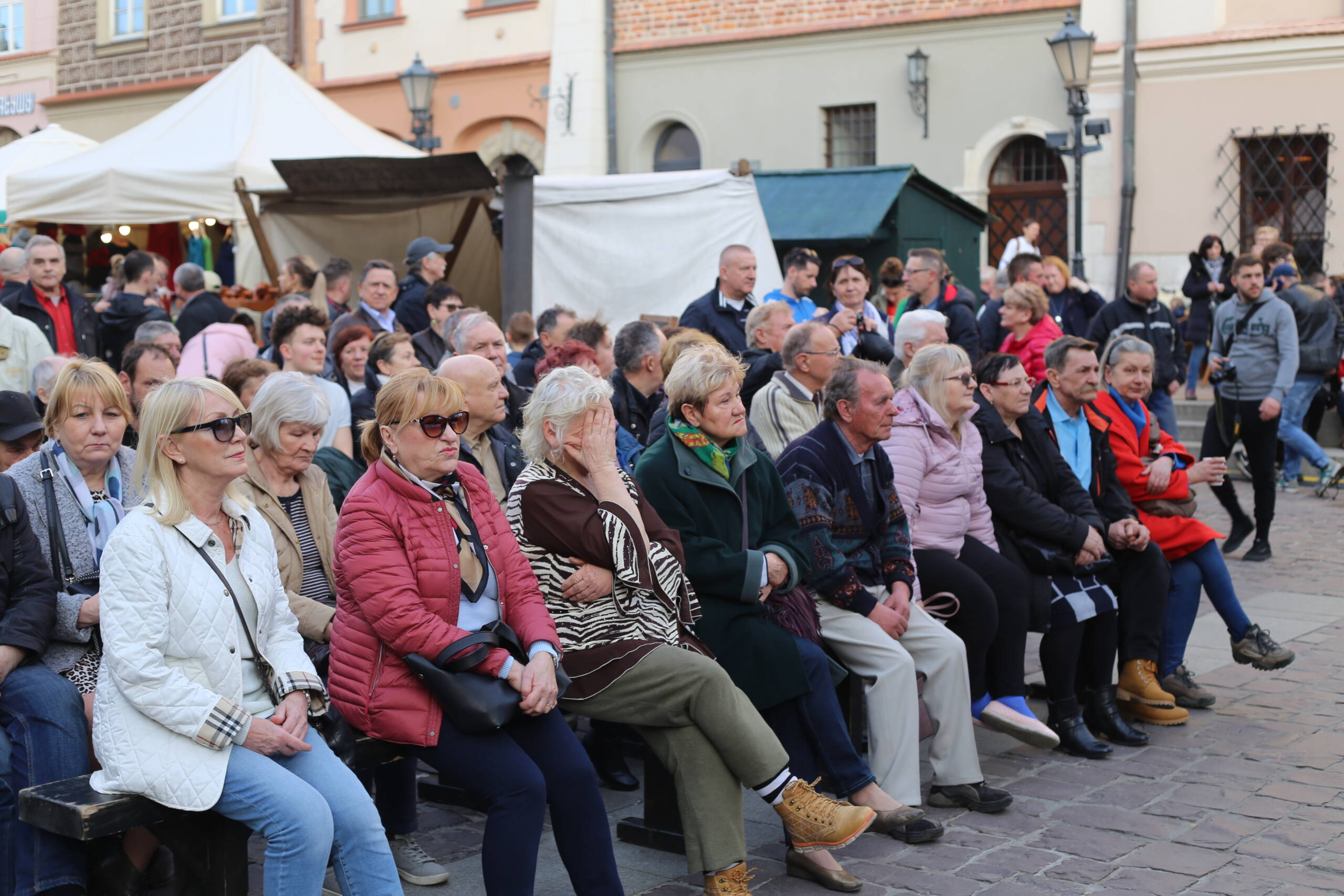
Behind them, the scene thickens into a standing crowd, looser, more fluid, people turning their heads, talking, watching, drifting between curiosity and routine. A white market tent anchors the left side, its canvas slightly wrinkled, while darker wooden stalls sit deeper in the background, hinting at a market or local gathering rather than a formal event. The buildings framing the square carry a quiet European texture—stucco, brick accents, arched windows, wrought iron details—nothing flashy, just layered history holding the space together.
There’s an interesting stillness in the seated group. Not boredom, exactly, but patience—like they’ve come prepared to sit through something, whether it’s a performance, a speech, or just the unfolding of the day itself. Their expressions range from mildly engaged to inwardly distant, and it’s that mix that gives the image its weight. It doesn’t try to dramatize anything. It just shows people being present, in that understated way that feels increasingly rare, where attention isn’t loud, it’s just… there.
Street photography’s oldest argument: you don’t need to show the thing that matters. You need to show what it does to the people watching.
Leave a Reply