• Skip to main content
  • Skip to secondary menu
  • Skip to footer

Media Instances

Generative Monkey

  • Sponsored Post
  • About
  • Domain Market
  • Contact
    • GDPR

It was hot 600 years ago and they did not talk about climate change

July 7, 2024 By admin Leave a Comment

The scene depicted in the image displaying a fragment of painting by Pieter Bruegel the Elder, titled “The Harvesters.” , with its portrayal of peasants resting during the harvest season, offers a glimpse into a time long before modern concerns about climate change. Six hundred years ago, the climate was indeed different, and while people did experience fluctuations in weather and temperature, the concept of climate change as we understand it today was not a part of their discourse.
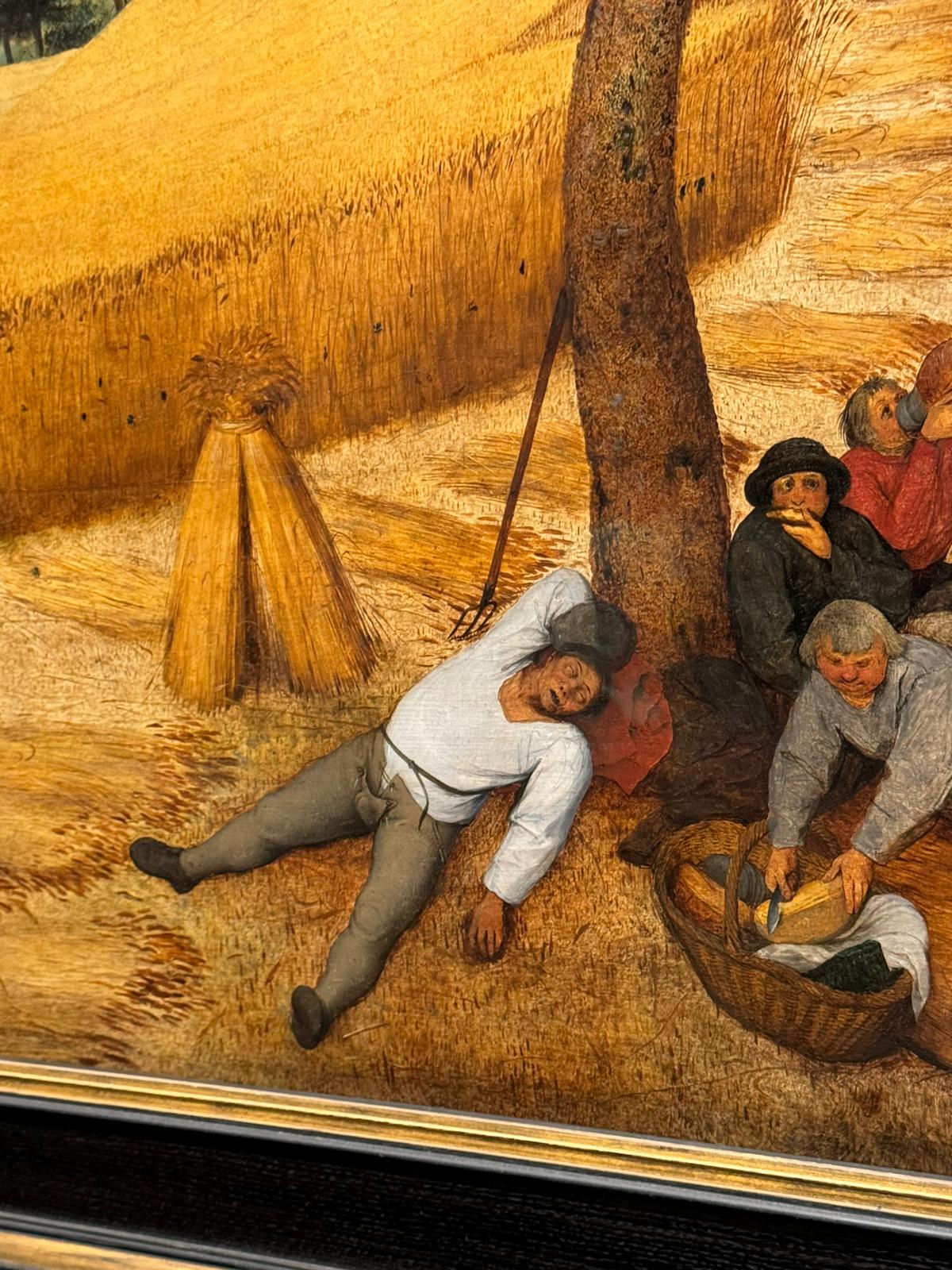
Pieter Bruegel the Elder’s “The Harvesters”

The Medieval Warm Period, which occurred roughly between 950 and 1250 AD, saw relatively warm conditions in many parts of the world, including Europe. This period was followed by the Little Ice Age, which brought cooler temperatures from the 14th to the 19th century. During these times, people were more directly attuned to the immediate impacts of weather on their daily lives and livelihoods, but they did not have the scientific understanding or the global perspective to conceptualize long-term climate change.

In the image, the intense heat of the harvest day is almost palpable. The golden wheat fields, the sweat-soaked shirt of the reclining man, and the shade provided by the tree all point to a sweltering summer day. The peasants, dressed in their simple, practical clothing, are taking a well-deserved break from their laborious tasks. The man lying down appears utterly spent, his face relaxed in the oblivion of sleep or deep rest. The tree trunk, rough and sturdy, provides a cool respite from the blazing sun, and the pitchfork leaning against it signifies the hard work temporarily set aside.

The woman and man to the right, busy with their task of preparing food, add a sense of continuity and routine to the scene. Despite the heat and the hard work, life goes on; they adapt to their environment without question. Their actions are part of a rhythm dictated by the seasons and the necessities of agricultural life.

This scene, rich with historical and cultural texture, is a powerful reminder of humanity’s enduring relationship with nature. It highlights the resilience and adaptability of people in the past, who faced environmental challenges with the resources and knowledge they had. Today, our understanding of climate change is informed by centuries of scientific advancement, yet the fundamental connection between human activity and the environment remains as relevant as ever.

While the peasants in the image did not discuss climate change, their lives were nonetheless deeply influenced by the climate and weather patterns of their time. Their day-to-day existence was a testament to the resilience and adaptability that are still crucial as we face our own environmental challenges. The scene serves as both a historical snapshot and a poignant reminder of the ever-present interplay between humanity and the natural world.

Filed Under: Media

Reader Interactions

Leave a Reply Cancel reply

Your email address will not be published. Required fields are marked *

Footer

Recent Posts

  • Markets Keep Betting on Resilience Even as the Shock Deepens
  • Primorsk and the Expanding Logic of Energy Infrastructure Warfare
  • France’s CNews Probe Is Part of a Larger Fight Over the Media System Itself
  • Ukraine’s Better Frontline Moment Still Does Not Equal Strategic Relief
  • Slovakia’s Sanctions Dissent Shows Europe’s Unity Problem Has Not Been Solved
  • Europe’s Energy Debate Is Sliding From Price Pain Toward Political Extraction
  • Chinese Chipmakers Are Taking Share, and the Nvidia Story Is Getting More Complicated
  • Samsung’s Expected Profit Surge Is a Reminder That the AI Buildout Still Prints Money
  • China’s Rules for Digital Humans Show Where Synthetic Media Is Heading
  • Britain’s Anthropic Courtship Reveals the New Politics of AI Alignment

Media Partners

  • pho.tography.org
  • JVQ.net: Just Very Quick
  • Referently.com
Chasing Separation: From a Simple Lens Question to a Shift in Perspective
Fujifilm X-H2S Review: The APS-C Camera That Stopped Making Excuses
Should You Buy the 7Artisans 75mm f/1.4 If You Already Own the Canon EF 85mm f/1.8 USM?
ShutterFest 2026 Returns to St. Louis, April 7–9
Shooting Against the Sun
Every Focus Motor Canon Currently Uses, Explained
Bokeh Geometry: A Background That Feels Creamy
Lens Linear Motors: The Silent Powerhouse
Lightroom Ecosystem: Mobile-to-Desktop Sync Secrets
Sharp Lens: Decoding MTF
The Quiet Nobility of a Stray
GAO Identifies Three Technologies That Will Reshape Society Within a Decade
General Purpose Robots Will Not Displace Workers Evenly — That Is the Real Risk
Tusk: What's Unfolding Looks Like Putin's Dream Plan
Cloudflare Analytics Shock: When Performance Breaks the Network
Mexico Breaks the Pattern: Oil, Cuba, and the Limits of U.S. Sanctions Power
The Deep-Sea Mining Rush Is About to Get Very Complicated
The Cost of Context Switching Is Not What You Think
Bird Flu in 2026: Where the Risk Actually Stands
China's Economy Is Slowing. Why That's Everyone's Problem.
The Untested Assumption: North Korea’s Nuclear Weapon May Not Exist Yet
What Multifamily Maintenance Actually Means
Autonomous Security Warfare: The Arms Race Governed by Almost Nothing
Google Researchers Lower the Bar for Quantum Attacks on Bitcoin's Cryptography
Quantum Computing: A Comprehensive Guide
Model Context Protocol (MCP) Guide
Maritime Chokepoints After Hormuz: Where Seaborne Trade Looks Most Exposed Next
A Mirror That Thinks Ahead: How Digital Twins Turn Reality into a Testable System
Autonomy Without Oversight Is Just Risk at Scale
Computing Beyond Certainty: Where Quantum Systems Start to Matter

Media Partners

  • k4i.com
  • 3V.org
  • Media Presser
The Bill Trap: Why Treasury Keeps Borrowing Short
Treasury Is Meeting Its Bills — For Now
Black Hat Asia 2026 Signals the Shift to Autonomous Security Warfare
Neural Data Is the Last Unprotected Frontier of Personal Privacy
Neural Implants: Where the Technology Actually Stands Right Now
Maritime Pressure Points: Sanctions, Shadow Fleets, and the Intelligence Race at Sea
Revolutionary Guards Claim Strikes on Gulf Aluminum Plants
Vector Database Guide
AI Infrastructure Spending Enters a New Phase of Scale
AI Regulation Is Lagging Behind Deployment Cycles
Retention Over Turnover: Clasp’s $20M Bet on Fixing Healthcare Hiring
Doctronic Secures $40 Million Series B as Autonomous AI Medicine Moves Into Real Clinical Practice
Halter Lands $220 Million to Scale Virtual Fencing Worldwide
How Phone Cameras Changed Everyday Memory
Perfect Corp. Brings AI Shopping Agents to the Frontline of Retail at Shoptalk 2026
Tensions Drive Energy and Markets
The Return of Small Local Markets, Part 2
The Subtle Shift Toward Cashless Living, Part 2
The Week Traffic Slowed but the Infrastructure Spoke Louder
Why Home Desks Keep Evolving
Regular and Predictable: The Only Strategy Treasury Has
Who Is Actually Buying U.S. Debt Now
From Therapy to Augmentation: The Neural Implant Transition Nobody Has Regulated
Fujifilm Refreshes Rio Takeda Sponsorship Site Ahead of JLPGA Tournament
The Shift from Task Robots to General Purpose Machines Is Happening Faster Than Policy Can Track
House Armed Services Democrats Press Hegseth on USS Gerald R. Ford Deployment Strain
Teamsters President to Join Henry Ford Genesys Nurses on Picket Line
The Beginning of the End: Iran’s Regime Enters Its Terminal Phase
Ukraine Is Burning Russia's Oil Cash Flow
Press Release Digest: March 23–27, 2026

Copyright © 2022 MediaInstances.com

Technologies, Market Analysis & Market Research