Photo essay
A country gets twelve square metres of carpet and a printed palm tree. The traveller gets eleven minutes on a square with four hundred strangers. Both of those things are the same industry.
Nine frames · Trade floor to town square · August 2026
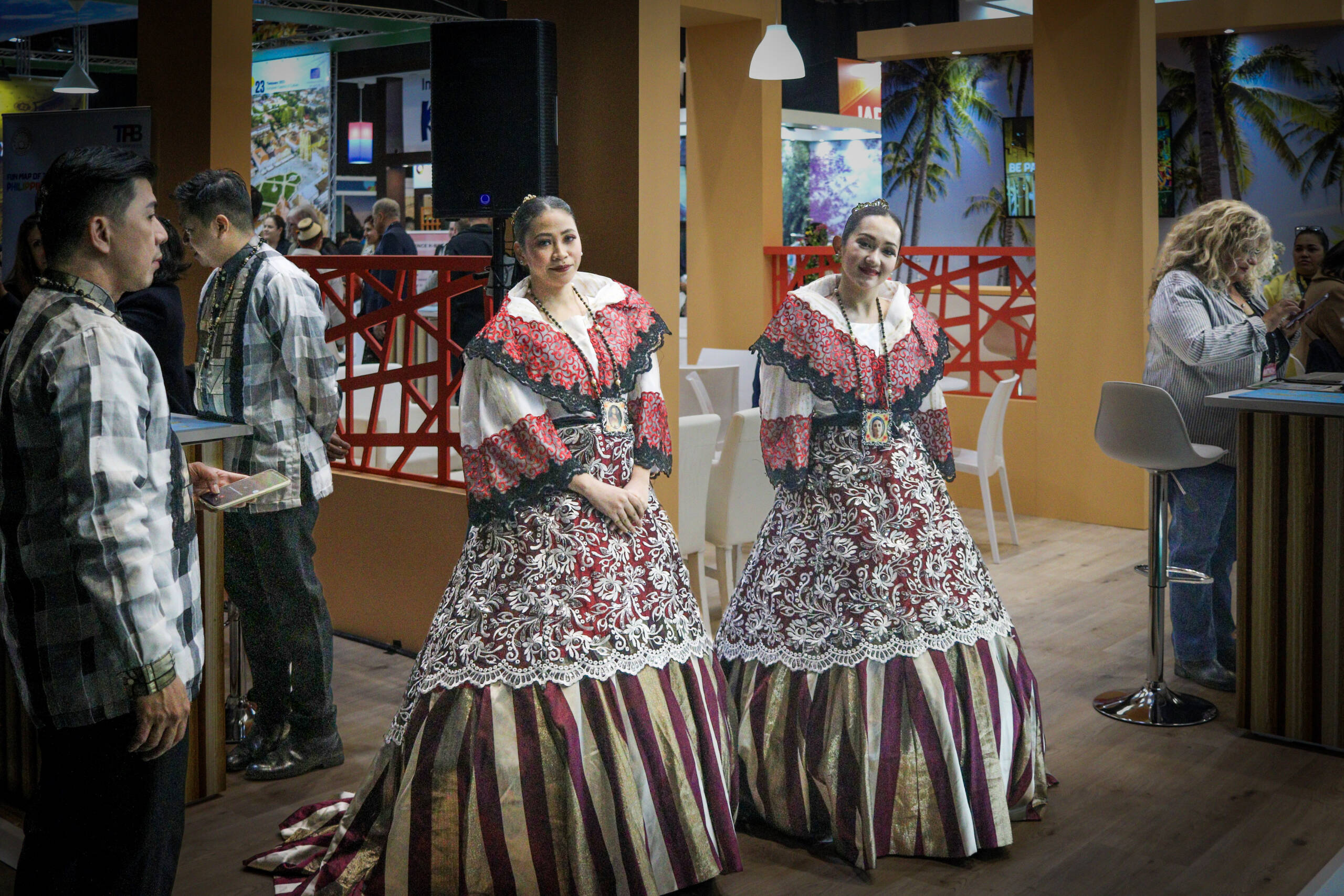
The women above are standing on carpet. Behind them, printed palms on a lightbox. Beside them, a red lattice screen, a bar stool, and a visitor with a lanyard who is already looking at her phone. This is a country being sold, and it is being sold the way every country is sold at a trade fair: compressed into a stand, staffed by people in the national dress, and priced in room nights.
I have no complaint about any of that. Somebody has to do the selling, and the alternative to a stand with printed palms is no stand at all, which is how destinations disappear from itineraries. What interests me is the distance. The pitch happens in a convention centre in February. The thing being pitched happens eight months later in a narrow street, in bad light, with a queue. Nobody photographs both ends of that pipe in the same essay, so here it is.
Frame 01
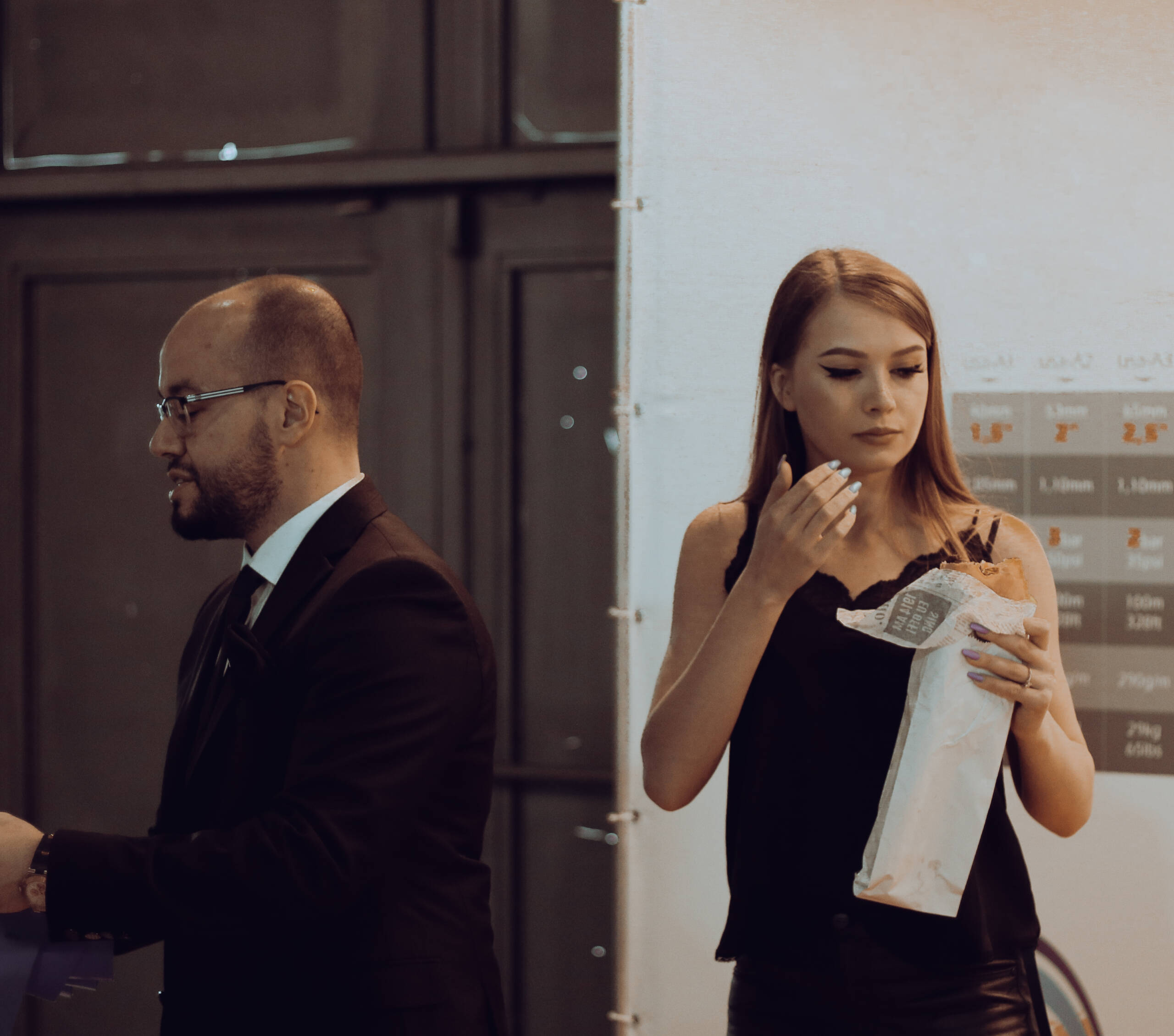
Lunch on the stand floor
Four in the afternoon on an expo floor and the suit has run out of things to say. She is eating something out of a paper wrapper, standing up, in a dress meant for a photograph. Behind them a projected table of figures nobody is reading.
This is where the year’s travel gets decided. Not romantically. Contracts, rate parity, distribution. The business layer surfaces publicly only when it breaks, which is what happened when China fined Trip.com $770 million for locking hotels into exclusive deals, and it surfaces again every time a carrier changes hands, as EasyJet did with the Apollo takeover. Rooms and seats get allocated by people who look like this at four in the afternoon.
Frame 02
The product, waiting
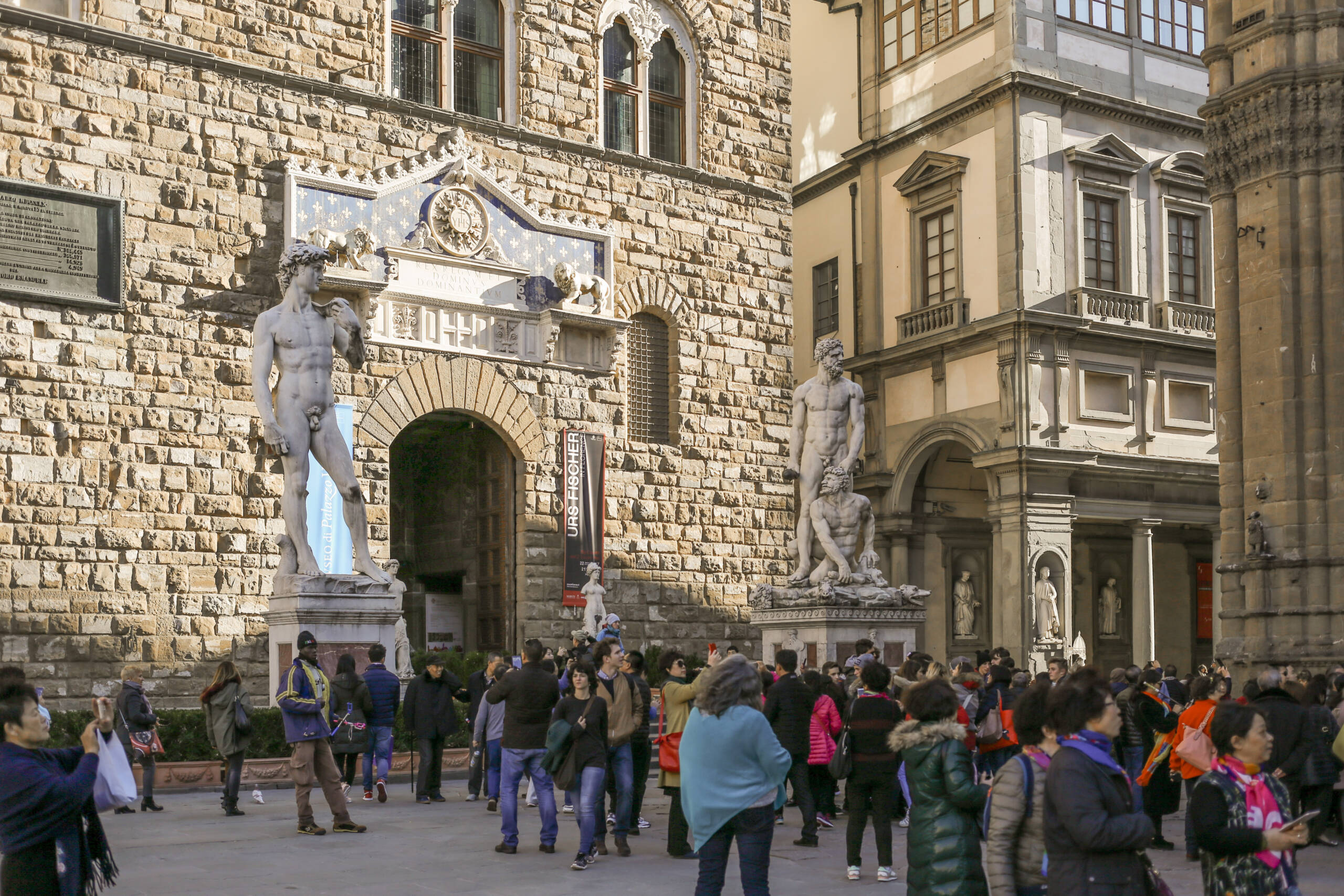
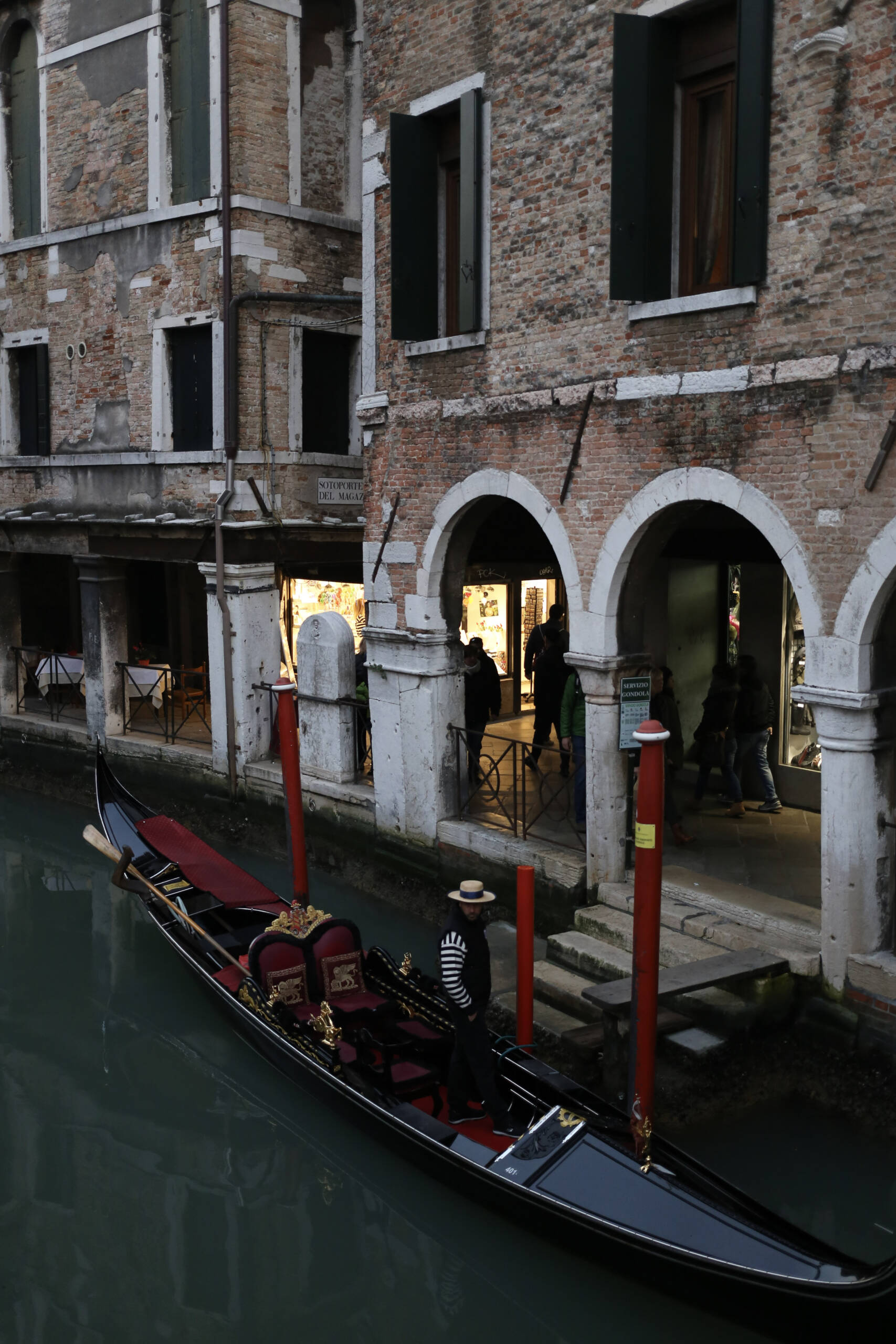
Here is the same industry with the lanyard off. A side canal, late afternoon, the light already gone from the water. Striped shirt, straw hat, gold seat cushions with the lion of Saint Mark stitched into them. A price list bolted to the pole. He is standing in the boat doing nothing, which is most of the job.
Venice is the city that best exposes the gap this essay is about, because the marketing image of it is so bright and the room itself is so dark. Stand inside the basilica for a minute and you learn that the gold mosaics are dimmer than the photographs suggest. Nobody is lying. Cameras just see more than eyes do, and the brochure was made by a camera.
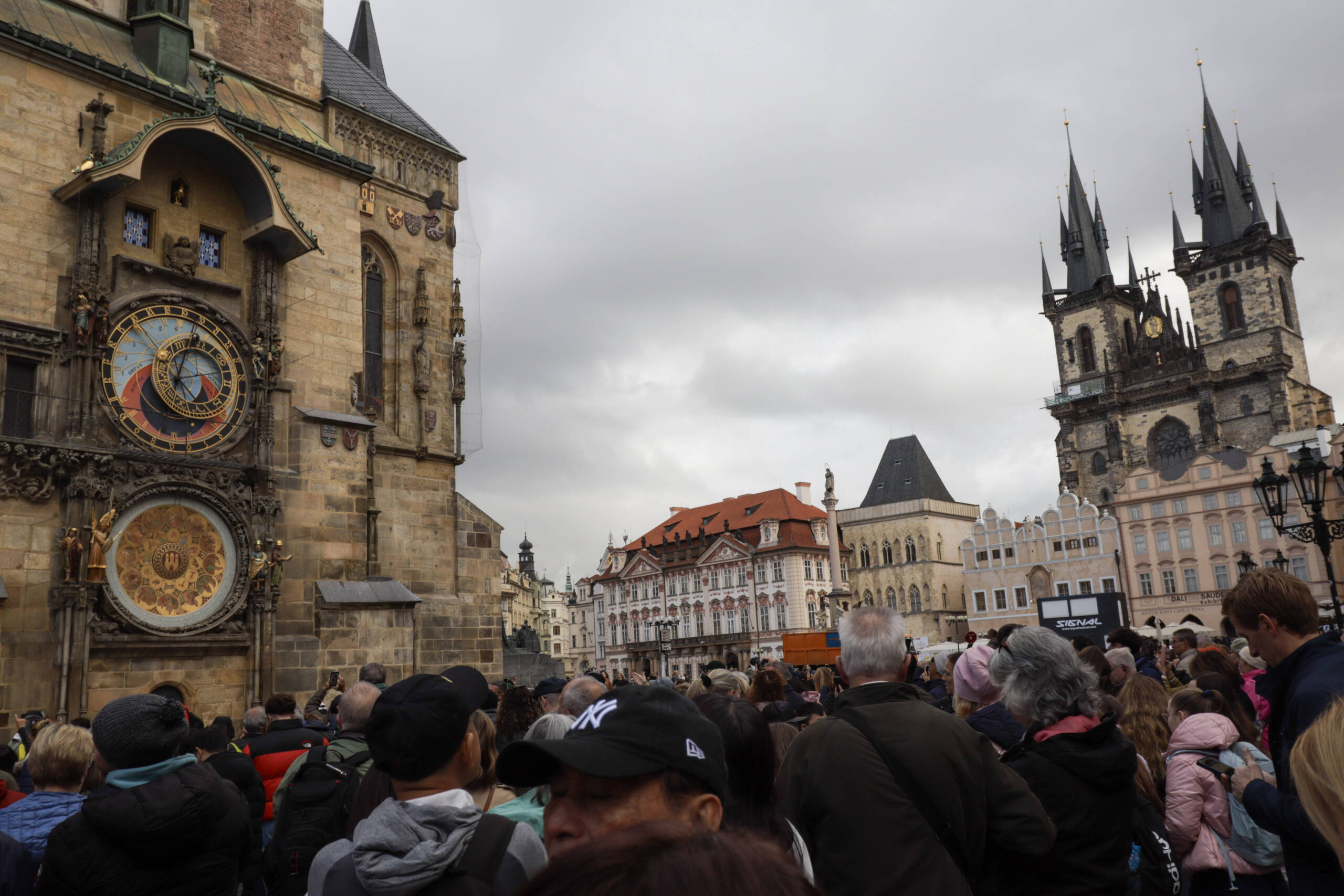
The industry sells access to a place. What it actually delivers is a short, crowded, weather-dependent window, standing up. The interesting question is not whether that is a swindle. It plainly isn’t. The question is why the window is often better than the promise.
Frame 03
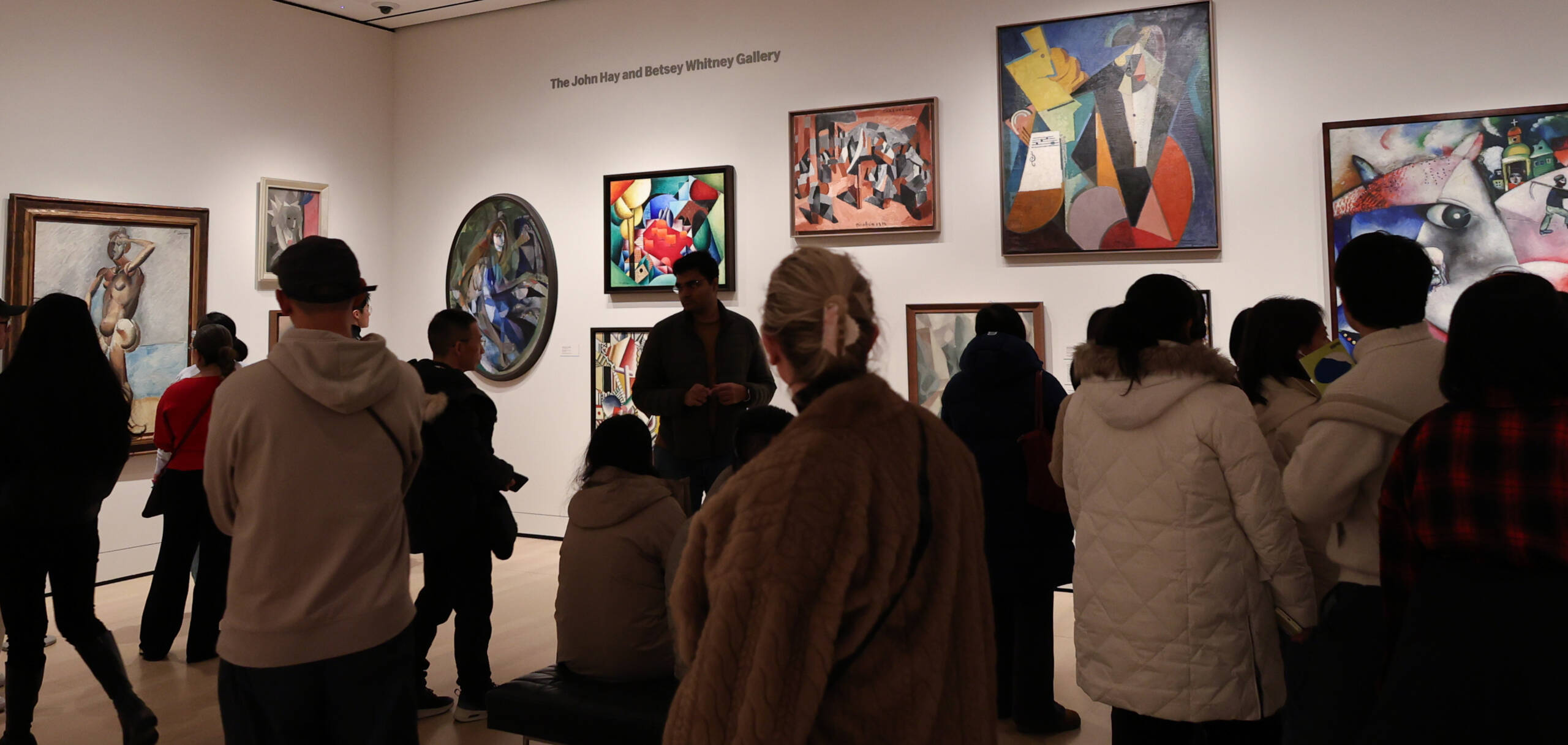
Coats on, twenty minutes, cubism
Winter coats indoors, which means nobody has checked anything, which means this group is on a schedule. One guide, a dozen people, a wall of pictures that took thirty years of European argument to produce, and about the length of a coffee break to look at them.
The reflex is to sneer at the packaged version. I have stopped doing that, for the same reason I ended up writing a defence of the hop-on hop-off bus. Packaging is what gets a first-time visitor through a door they would otherwise walk past, and it is why a building designed as a marketing object, like the Cité du Vin in Bordeaux, still ends up teaching people something real about wine.
Frame 04
Two heads over a screen
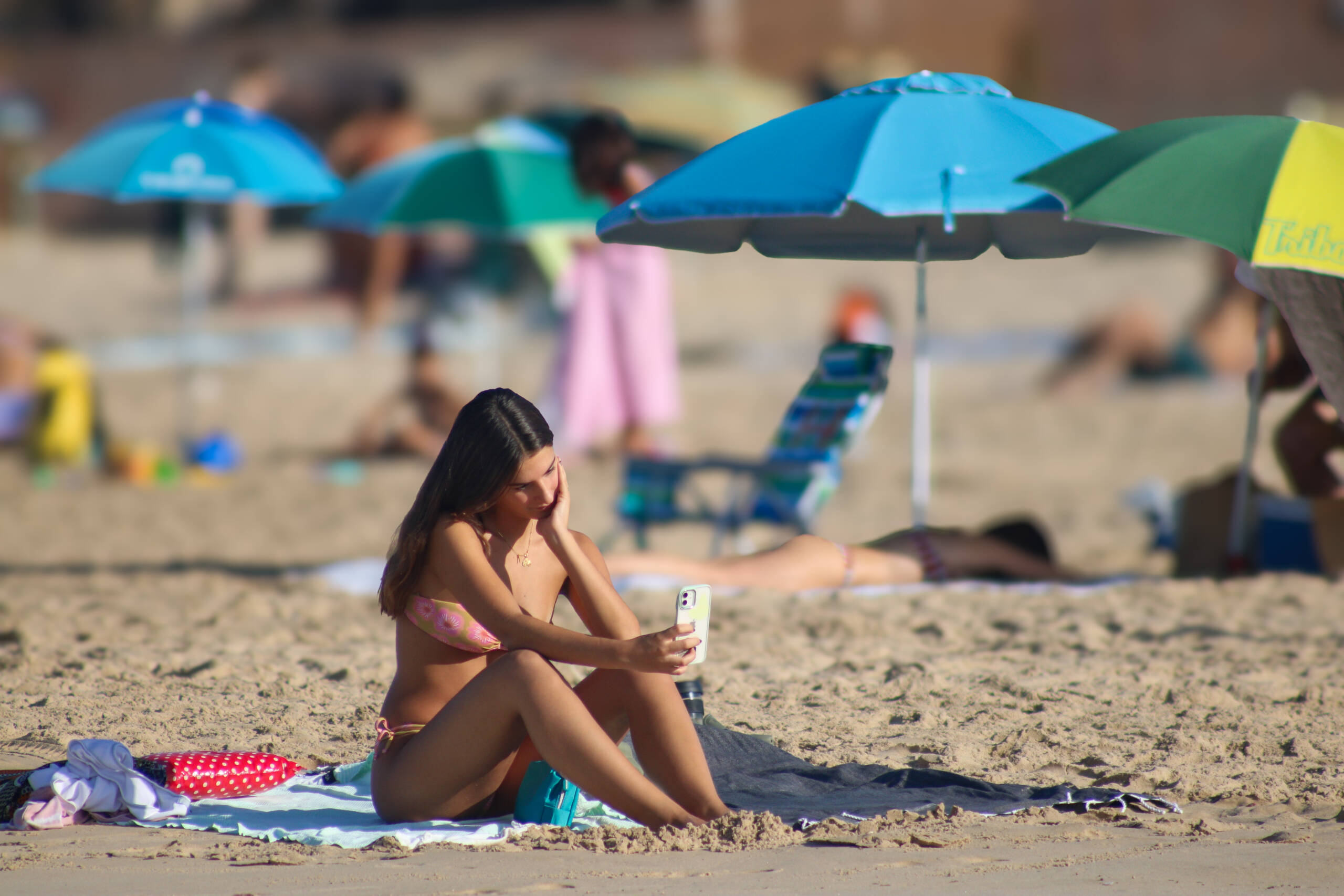
Backpack, DSLR on a strap, red heels that were a decision. Their heads are touching and both of them are looking down at three square inches of glass, checking whether the picture worked. Behind them a wall, a lamp post, a bin.
This is the actual centre of modern travel and no tourist board owns it. The trip is a raw material now. What people are producing is a file, and the place is judged on how well it renders. That is the whole engine behind the queue for a balcony in Verona that was bolted on in the 1930s, and it is why my own year in review runs on five photographs rather than five numbers.
The stand sells the country. The photograph sells the trip. Only one of those two things is made by the traveller, and it is the one that decides where everybody else goes next year.
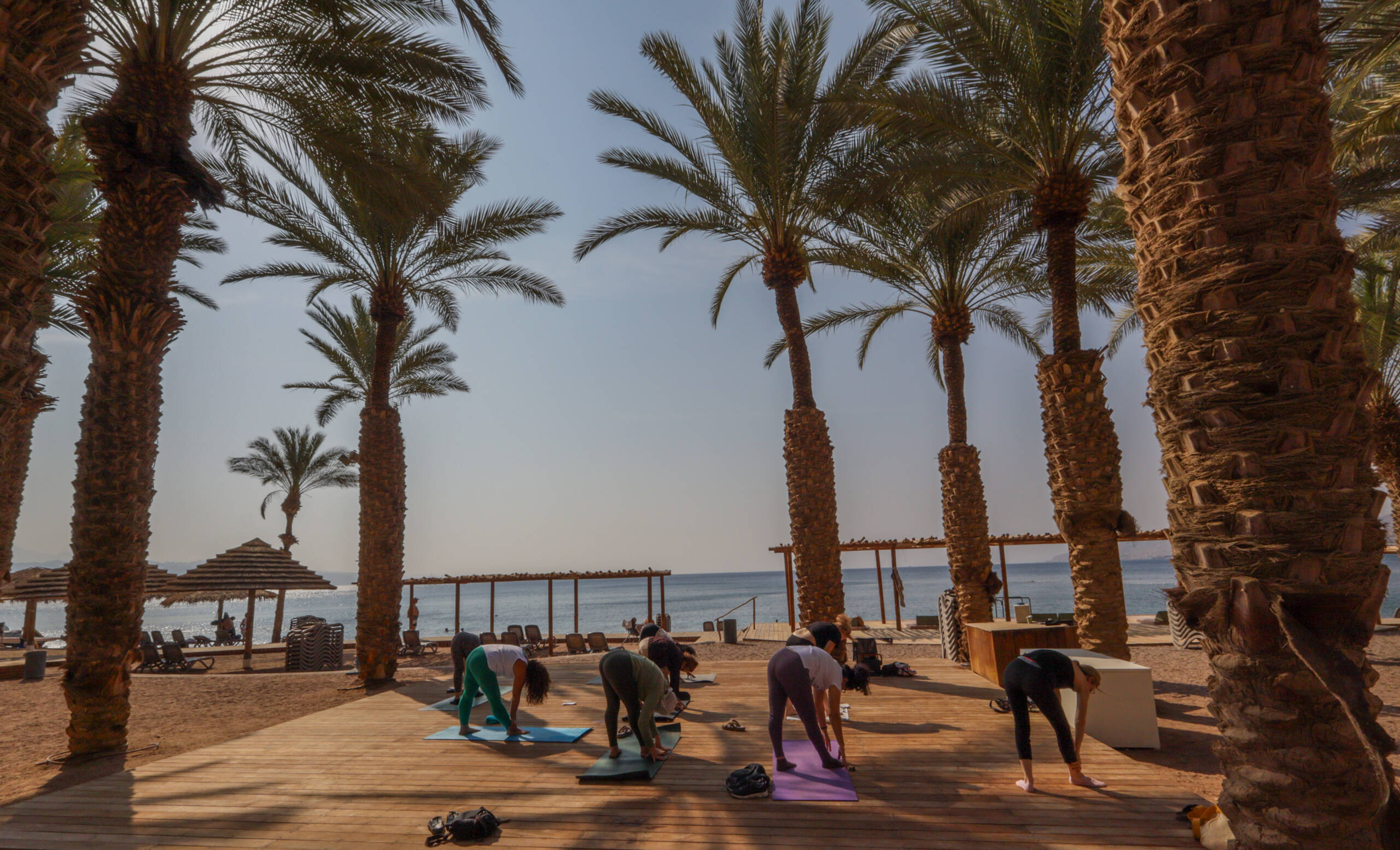
That deck is a marketing asset before it is a yoga class. Palms on both sides, water dead flat, a boardwalk that photographs as a corridor. Resorts build these because they know exactly which fifteen minutes of the day will be posted. It works, and the eight people bending over are having a genuinely good morning anyway. Both of those facts hold at once, which is the honest version of this whole business.
The same logic scales up to itineraries. A cruise line adding calls at Flåm and Hellesylt for 2027 is buying two names that photograph well and slot into a seven-day loop. And it scales down to dinner, which is why the open kitchen spread across Europe: it turns the cooking into something you can watch, and therefore something you can shoot.
Frame 05
Somebody else’s actual life
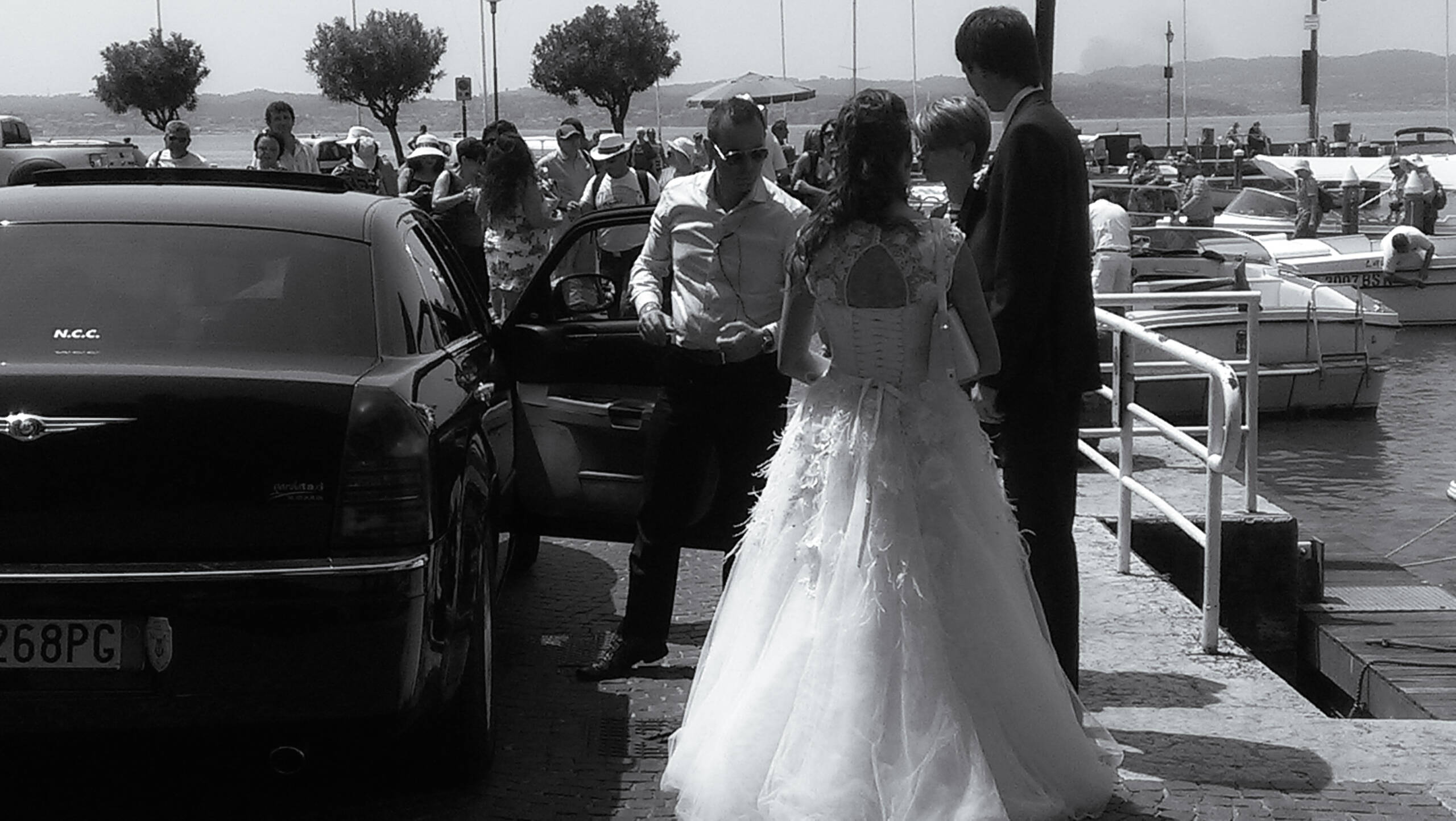
A hire car with the driver holding the door, a dress crossing wet cobbles, moored boats, a quay full of people in sun hats who came for something else entirely and got this instead. Half the crowd is watching the bride. The bride is watching her feet.
Every busy destination runs two economies on the same square metre. One of them is visiting. The other one lives there, gets married there, parks there, and sends its kids to school behind the postcard view. You feel the collision most in the small Sicilian places, where the beach is 200 metres below the town you booked, and around monuments people actually use, like the lava elephant in Catania’s Piazza del Duomo.
What the nine frames add up to
The stand is not the problem
Printed palms and national dress are a rational answer to three seconds of attention in a hall with two hundred competitors. The failure is not the compression, it is when the stand promises a version of the place that no arriving traveller will ever stand inside.
Friction is now marketing
Nothing shapes a European itinerary this year like the border queue. ETIAS slipping to late 2026 while the biometric entry system runs live is not an admin footnote. It is a variable people plan around, and destinations that ignore it lose the short trips first.
The small places are winning quietly
The clock crowd is one behaviour. The move towards towns nobody photographs is another, and it is not simply people spending less. It is people who have already done the eleven minutes and want a street where nothing is scheduled.
Advice moved to a screen
The stand used to be where a trip got built. Now it is one input among many, and the money knows it: a billion-dollar valuation for a platform of independent advisors is a bet that recommendation, not inventory, is the scarce thing.
Nobody ever photographs the carpet, and the carpet is where your holiday was decided.