Most people come to the Musée de l’Orangerie for the water lilies. Monet’s eight curved canvases fill two oval rooms on the ground floor and that’s usually where the visit ends. Downstairs is a smaller, stranger collection that gets skipped by anyone on a schedule: the paintings Paul Guillaume bought as a young dealer in the 1910s and 20s, later folded into what became the Walter-Guillaume collection after his widow remarried. It’s a personal collection, not a survey, and it shows. A handful of these paintings are worth stopping for on their own.
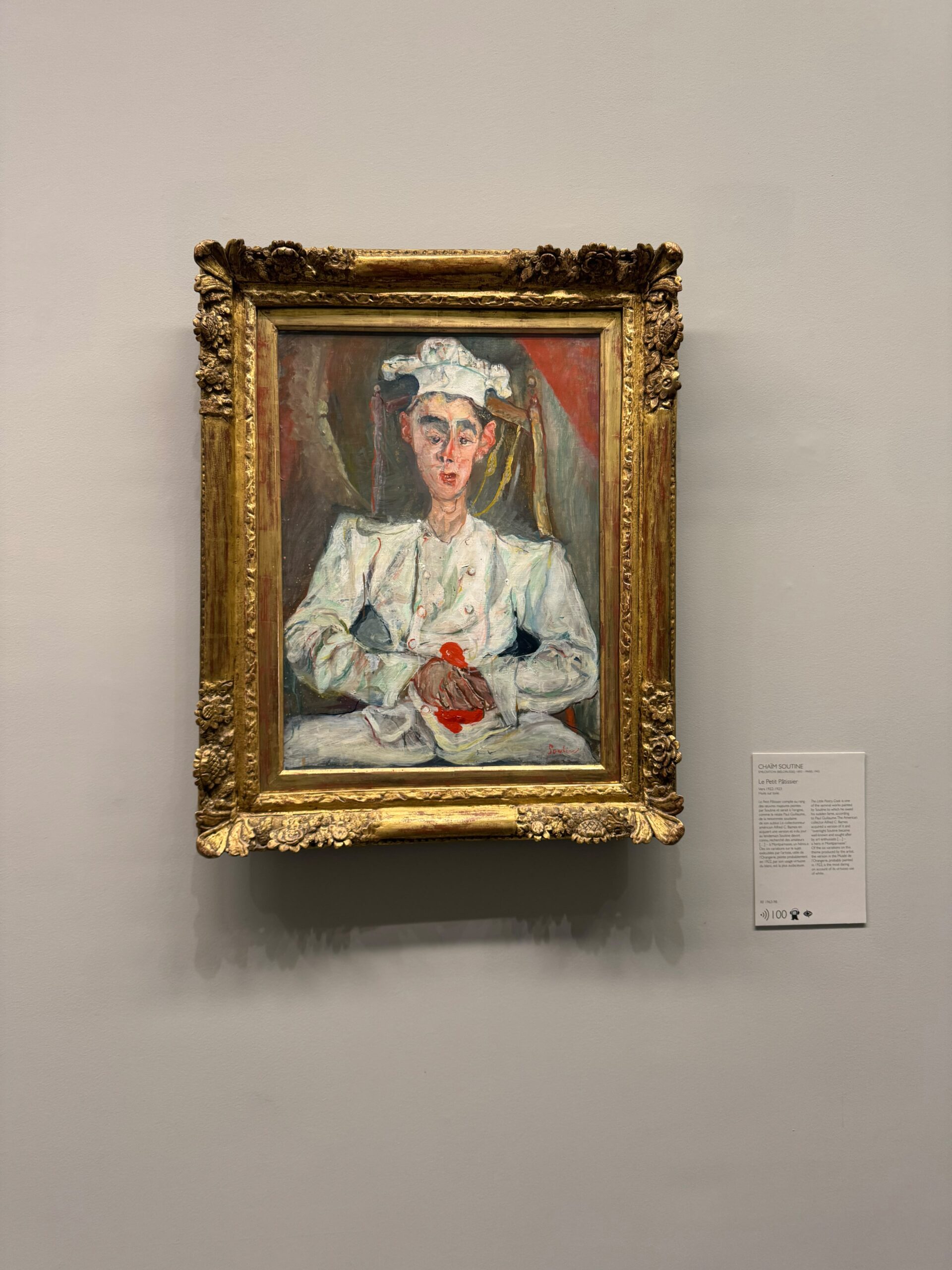
Chaïm Soutine’s Le Petit Pâtissier (The Little Pastry Cook), painted around 1922-1923, is the one that stops most people mid-stride. A young cook sits in his kitchen whites, chef’s toque askew, mouth slightly open like he was interrupted saying something. One hand grips the other in his lap, painted in a smear of red that reads as either a rag, a burn, or nothing at all, just paint refusing to explain itself. Soutine painted several versions of the same boy. Guillaume bought this one and reportedly considered it among the works that made his reputation as a collector willing to back an artist everyone else found ugly.
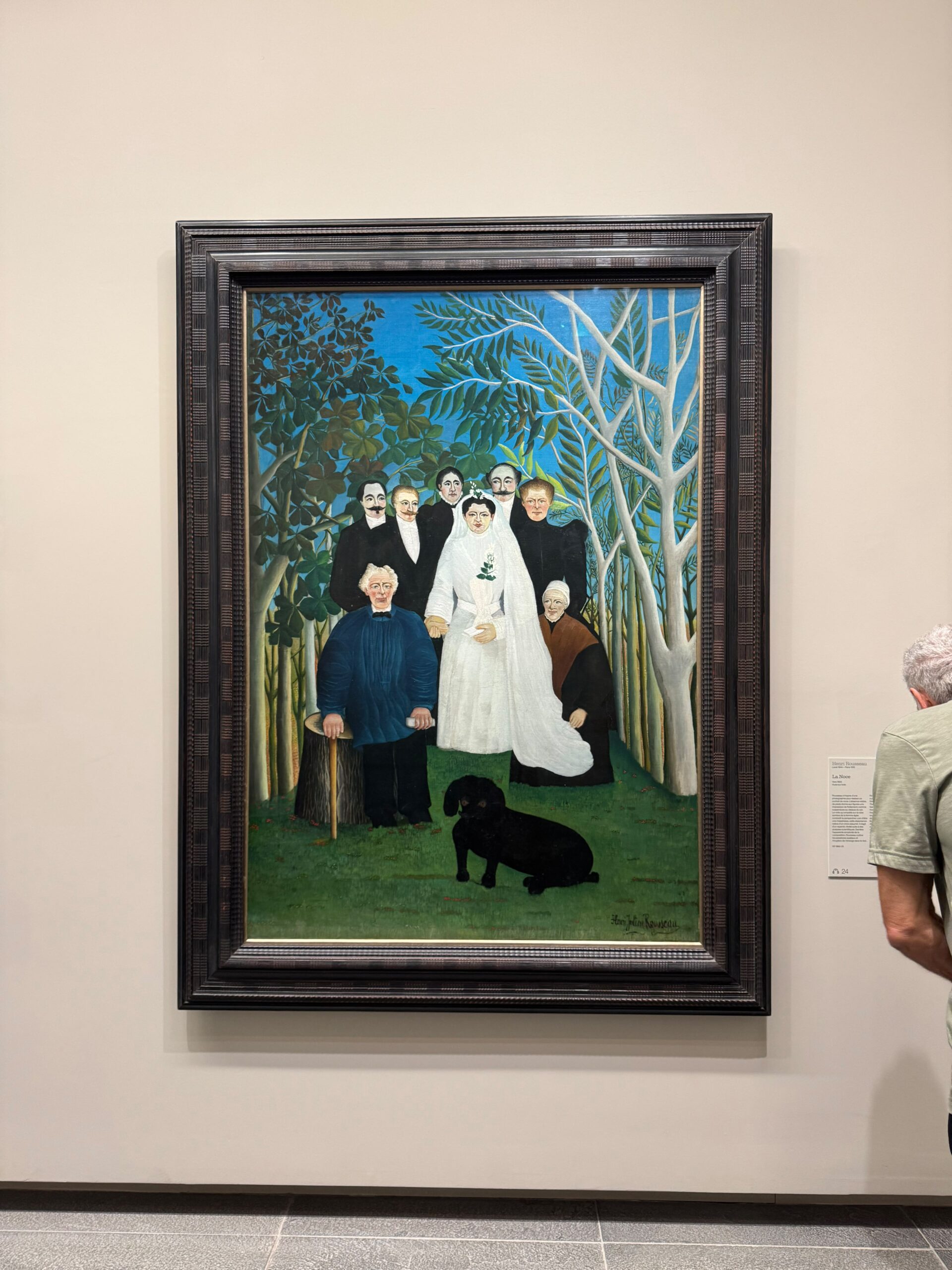
Henri Rousseau’s La Noce (The Wedding Party), from around 1905, is the opposite kind of painting: flat, frontal, almost naive in its formality. Nine wedding guests stand in two stiff rows under trees rendered as decorative cutouts, the bride in white at the center, a black dog sprawled in the grass in front like it wandered into a photo shoot. Rousseau was a customs clerk who painted on Sundays and never left France, and it shows in the best way. Nobody else was making pictures like this.
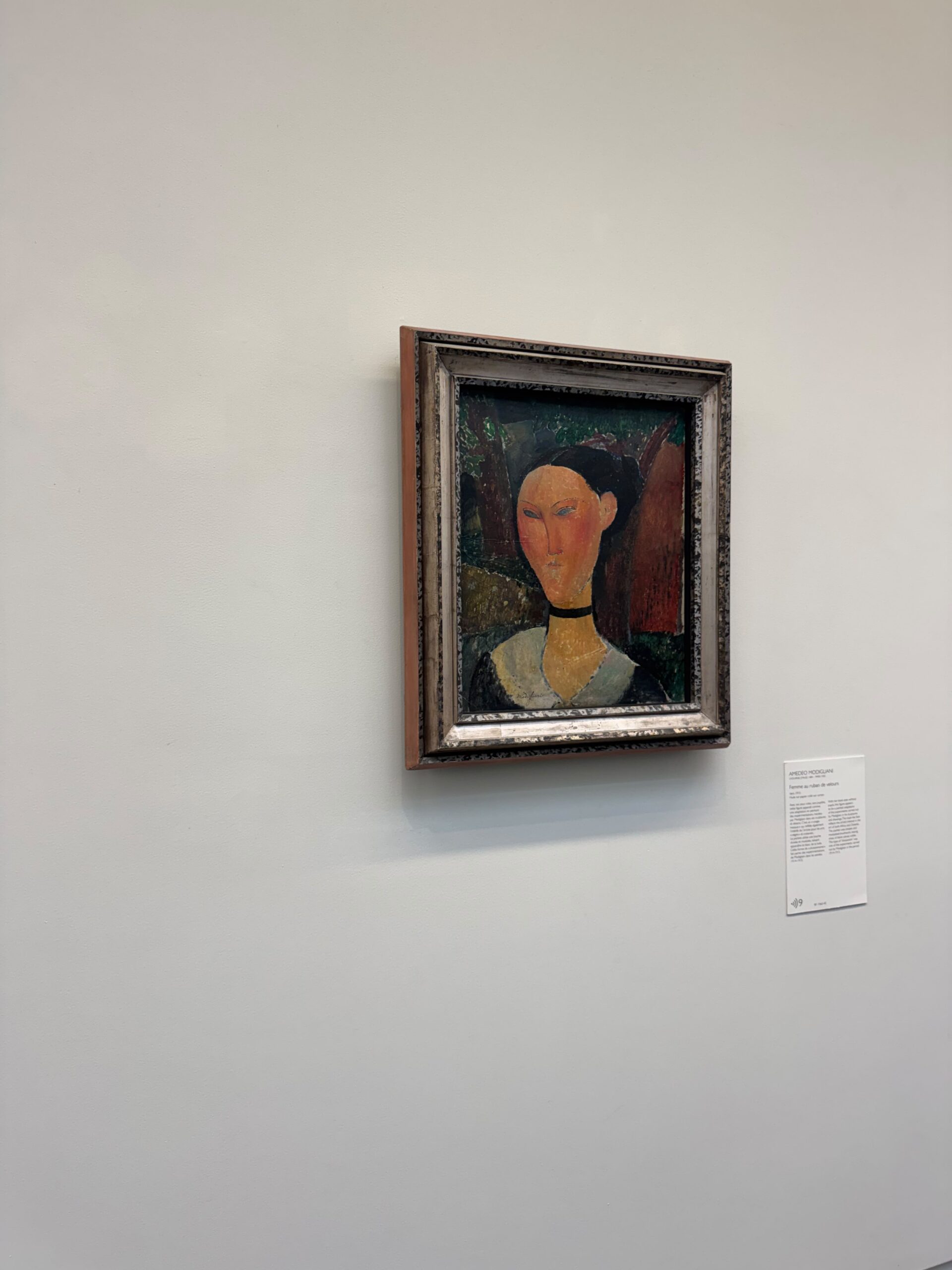
Modigliani’s Femme au ruban de velours (Woman with a Velvet Ribbon), around 1915, is small and easy to walk past, tucked on a wall by itself. The elongated neck and almond face are the signature moves, but what holds attention is the black ribbon at the throat, a single hard line against all that soft orange skin. It’s an early work, close to his Cubist-influenced period, before the style fully settled into the languid portraits he’s known for.
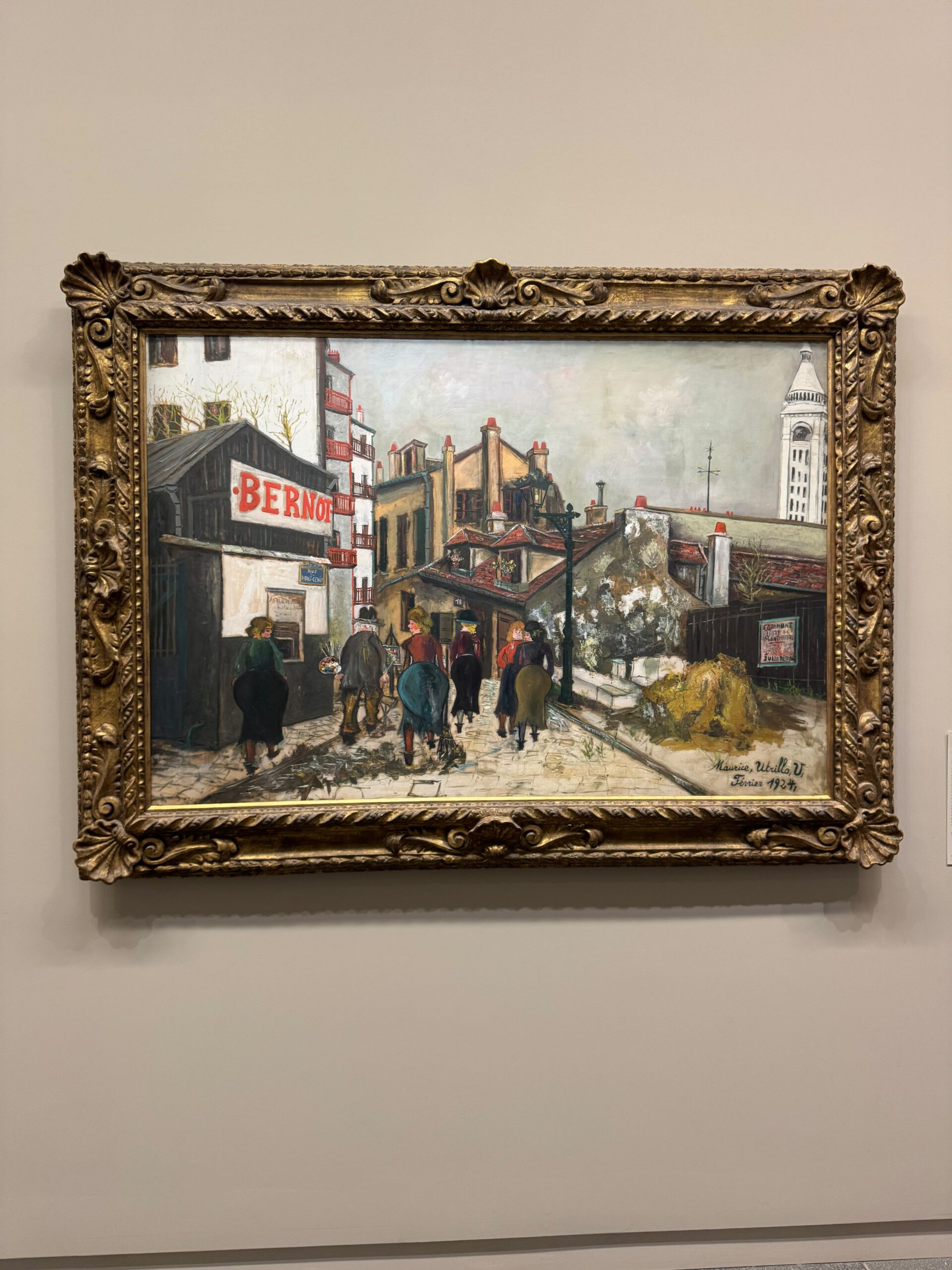
Maurice Utrillo’s La Maison Bernot, dated February 1924, is a street corner in Montmartre near the Rue du Mont-Cenis, painted from a photograph rather than life, which was Utrillo’s habit by that point. The chalky whites and the flat gray sky are his trademark, a palette people started calling his “white period” even though by 1924 he’d already moved past it into brighter color. The dome of Sacré-Cœur sits in the background, small and almost incidental, which tells you where his interest actually was: the street, the signage, the pedestrians walking away from the camera.
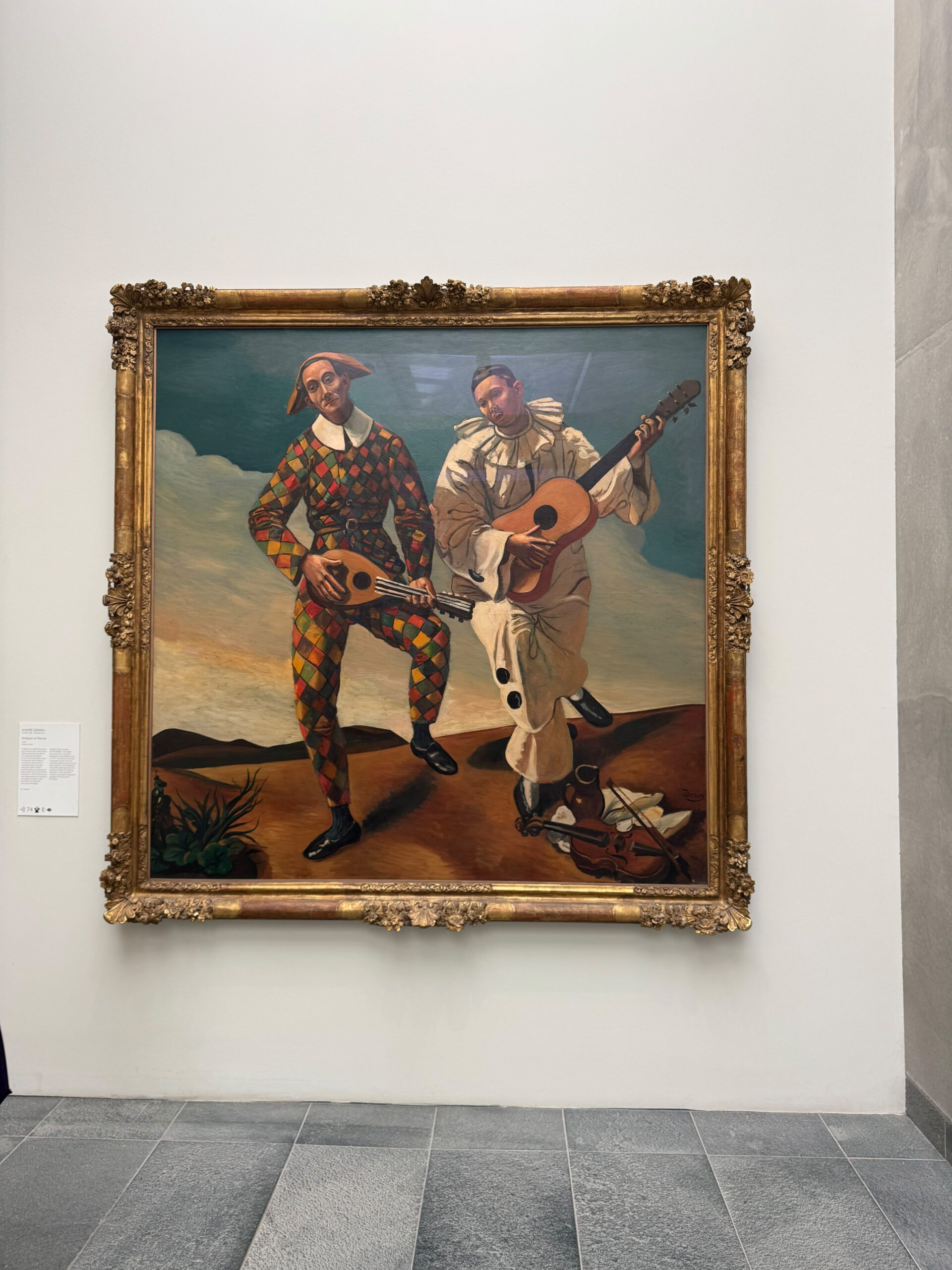
André Derain’s Arlequin et Pierrot (Harlequin and Pierrot), also from 1924, is the largest and strangest painting in the room. Two commedia dell’arte clowns stand mid-performance, one in a diamond-patterned suit, the other in loose white, both holding instruments, a violin and bow discarded on the ground between them like the music already went wrong. Derain had moved on from Fauvism by then and was deep into his classicizing phase, borrowing poses and stillness from Renaissance painting while keeping the subject pure theater. It reads like a photograph of a rehearsal, not a performance.
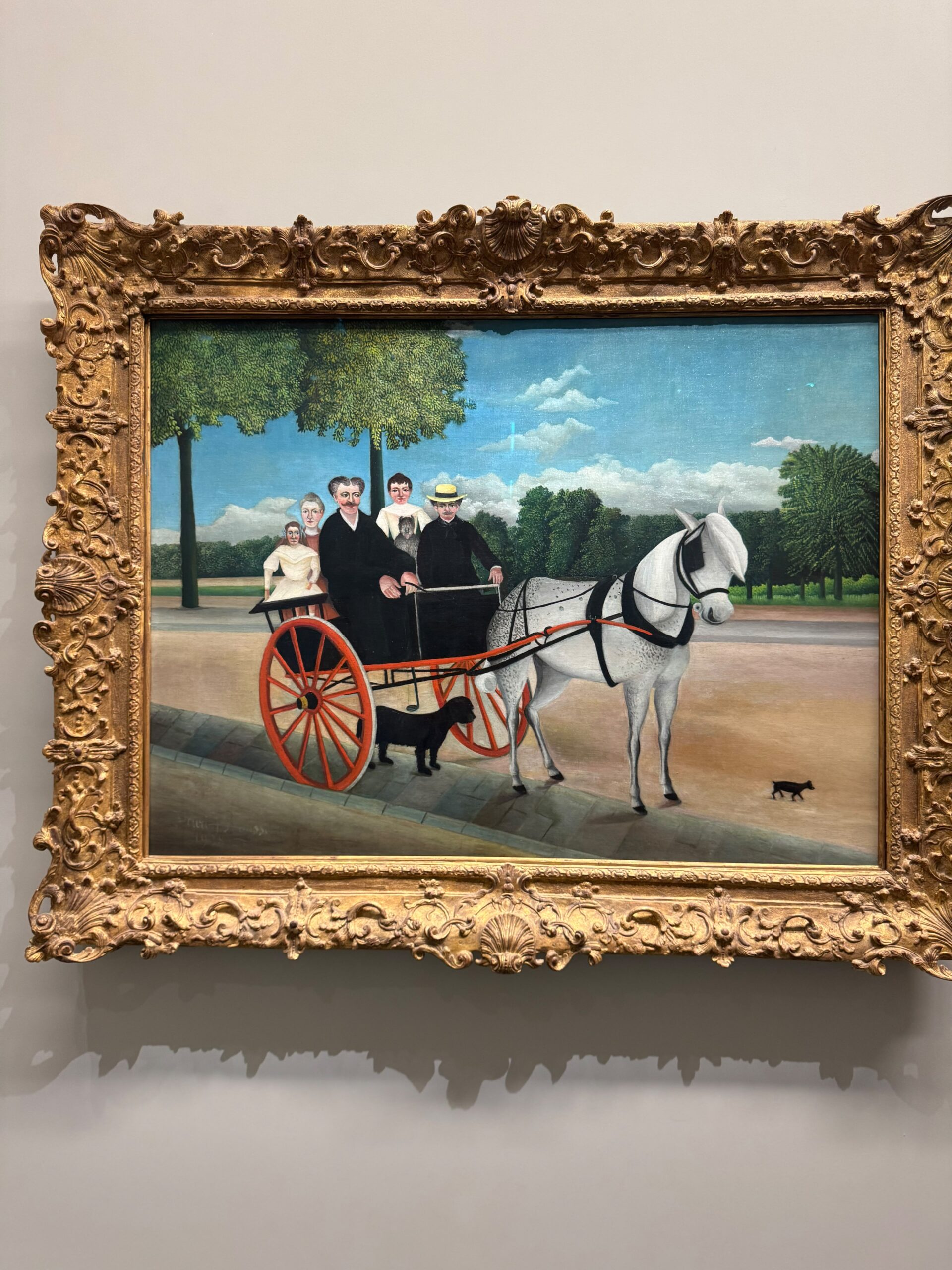
The second Rousseau in the room, La Carriole du Père Junier (Old Junier’s Cart), from 1908, is a family portrait disguised as a street scene. Five people are crammed onto a two-wheeled cart pulled by a white horse rendered with more anatomical care than anything else in the painting, ears back, muscles defined, clearly the thing Rousseau cared most about getting right. A black dog stands guard at the wheel and a smaller dog trots by in the distance, unrelated to anyone, just there because Rousseau wanted it there. The perspective is off in every direction and none of it matters.
Six paintings, four decades of style crammed into one short stretch of the twentieth century, bought by a dealer with better instincts than most of his contemporaries gave him credit for at the time. Worth the fifteen minutes it takes to walk through, even with Monet waiting downstairs.