A bride in a full lace gown crosses harbour cobbles toward a black saloon while the driver holds the door open. Guests and moored boats fill the background. The light is hard midday sun, the frame is black and white, and everyone has their back to the camera.
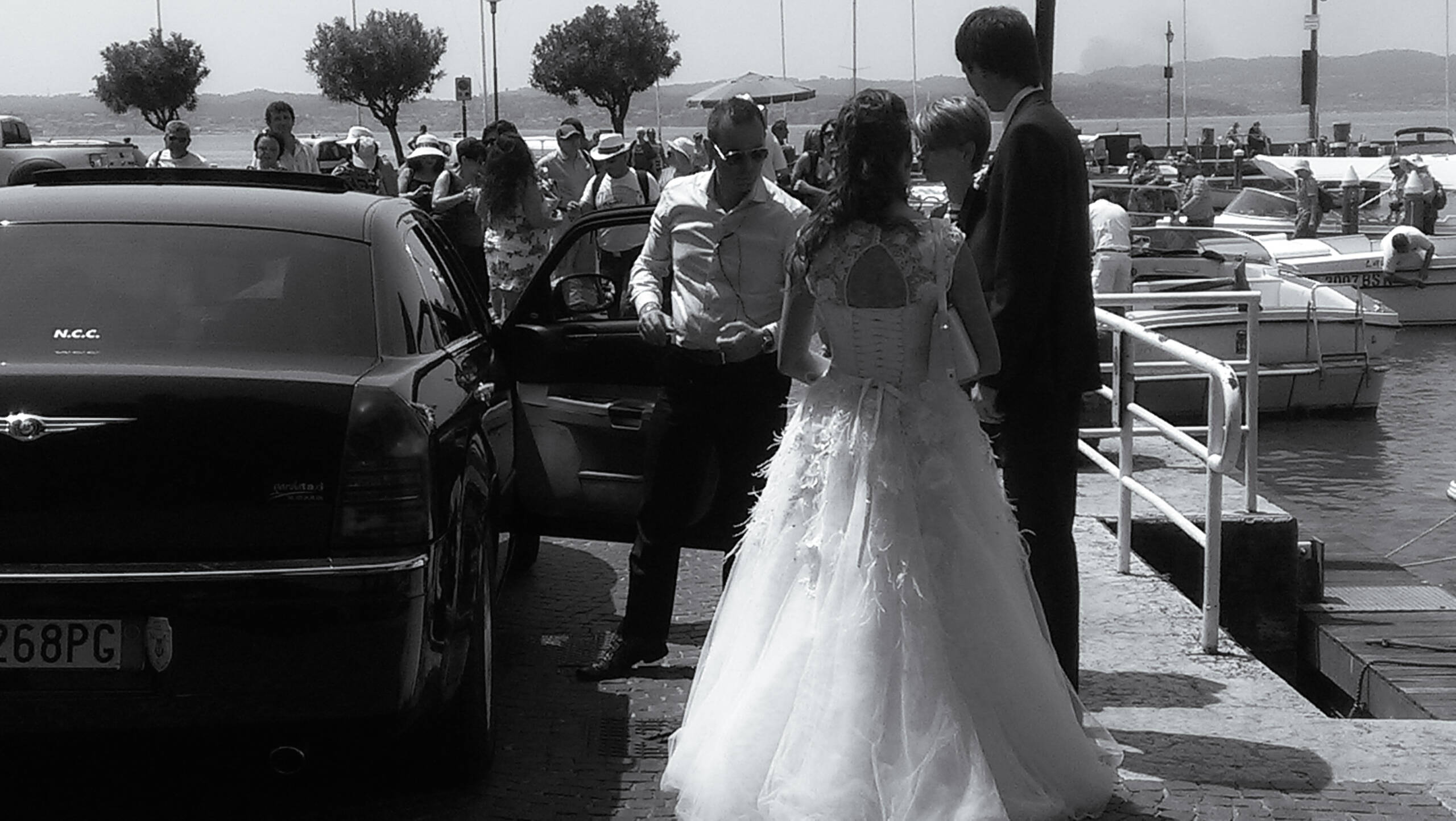
The detail that gives the scene away is small. The car carries N.C.C. lettering and a plate naming Perugia.
What N.C.C. Means
In Italy N.C.C. stands for noleggio con conducente, hire with driver. It’s a licensed category of its own, separate from taxis. Taxis wait at ranks and can be hailed in the street. NCC cars are booked in advance, and their licences are issued by a specific municipality, which is why a town’s name tends to travel with the car.
From the back seat the difference hardly registers. Both get you there. What differs is who’s allowed to pick you up and where.
Weddings are a steady part of that business, alongside airport runs and corporate transfers. A polished black saloon and a driver holding the door: that’s the product.
The Long Fight With Taxi Drivers
Italian taxi drivers have fought NCC operators for years, and the dispute got sharper once ride-hailing apps arrived, because in Italy those apps largely run on licensed NCC drivers. Rules forcing NCC cars back to their home garage between jobs, and limits on working outside the area that issued the licence, have gone back and forth through parliament and the courts, with taxi strikes along the way. Apps pushed the line hardest, since a booking made thirty seconds before pickup looks a lot like a hail. Brides don’t book their car on an app, which keeps weddings out of the worst of it.
Taxi licences in the big cities are limited in number and change hands for serious money. Every loosening of the NCC rules lands on that value, which is why the fight never quite ends.
None of this is on the bride’s mind as she walks to the car. It’s on the plate, though. A wedding day in Italy runs on the same licensing system as a hotel pickup at the airport, and the driver holding that door works in one of the country’s most contested small markets.