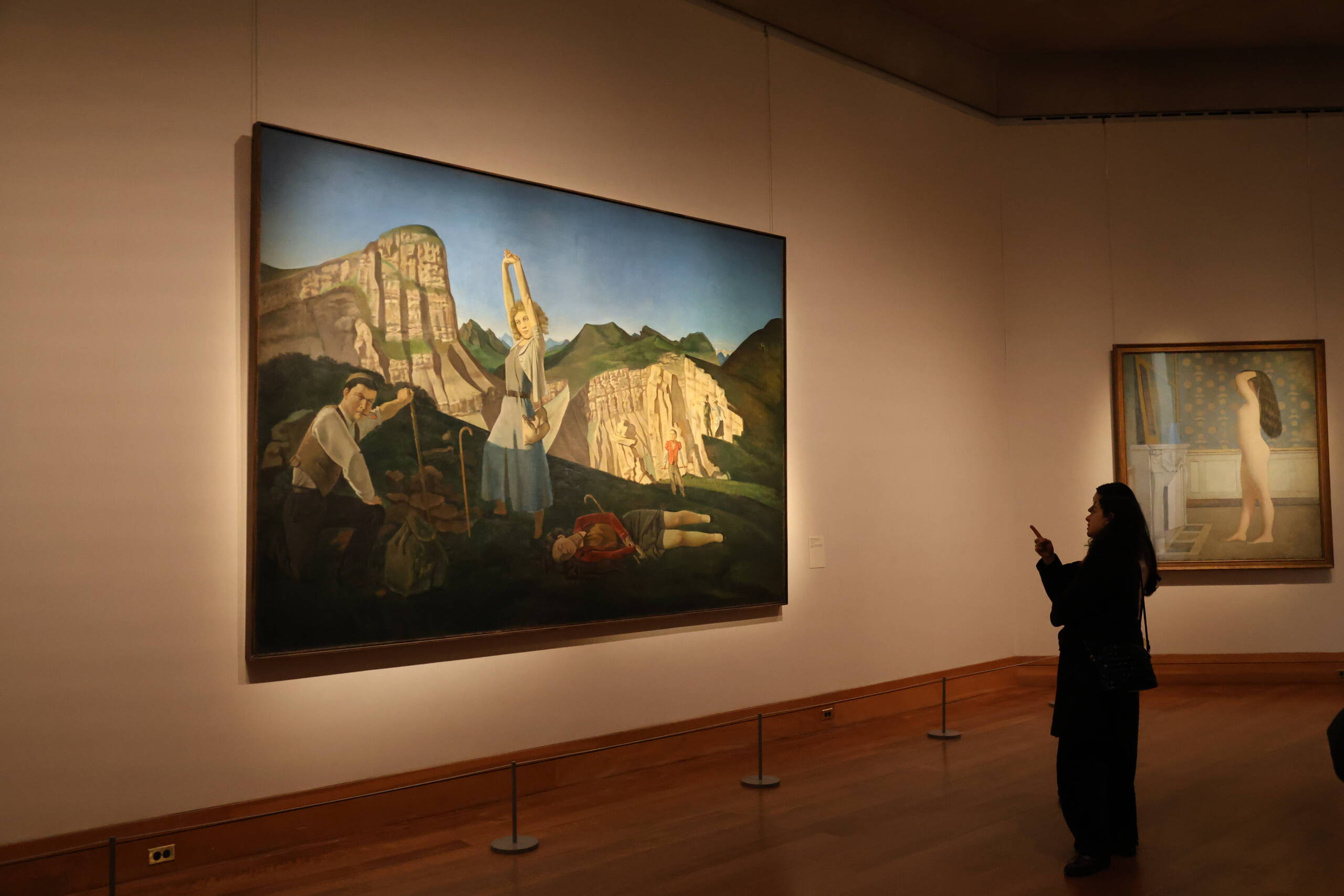
Two paintings by Balthus hang side by side in this gallery at the Metropolitan Museum of Art in New York. One is The Mountain (1937), a large alpine scene full of figures who don’t seem to notice each other. The other is Nude Before a Mirror (1955). A rope barrier and a wooden floor complete the room.
The Petition the Met Turned Down
In 2017 an online petition asked the Met to remove another of its Balthus paintings, Thérèse Dreaming (1938), or change how it was presented. The painting shows a young girl sitting with one knee raised and her underwear visible. The petition landed in late 2017, just as the wider reckoning over sexual abuse was getting under way, which gave it far more reach than an art-world complaint normally gets. Thousands signed. The Met said no, and its public answer was that museums are there to show art from across time and cultures and that moments like this are a chance for conversation.
It was a small fight with a very large audience. Balthus became a test case again, and the museum drew the line where most big institutions now draw it. Keep the work on the wall and let people argue about it.
Balthus himself always rejected erotic readings of his pictures. He said the girls he painted stood for innocence, and he preferred to talk about the old masters rather than his own life. Critics never fully bought that, and the argument has now outlived him by a quarter of a century.
What a Gallery Photo Leaves Out
A photo of the room like this one strips all of that away. There’s no label, no wall text and no petition in it. Posted without a caption it reads as a quiet afternoon at a museum.
That’s the odd position every contested painting is in now. A museum can write careful wall text, and millions of visitors will still take the picture without it and send it on. Whatever context the Met adds ends at the edge of somebody’s phone screen.
Scale goes missing too. The Mountain is a big, odd canvas, and much of its oddness comes from standing in front of it. On a feed it’s a thumbnail.