Four people cross a street near Florence’s Duomo, cropped at waist height from behind. Shopping bags swing at their sides, one of them wears a shearling coat, and long hard shadows run across cracked paving. There isn’t a single face in the frame.
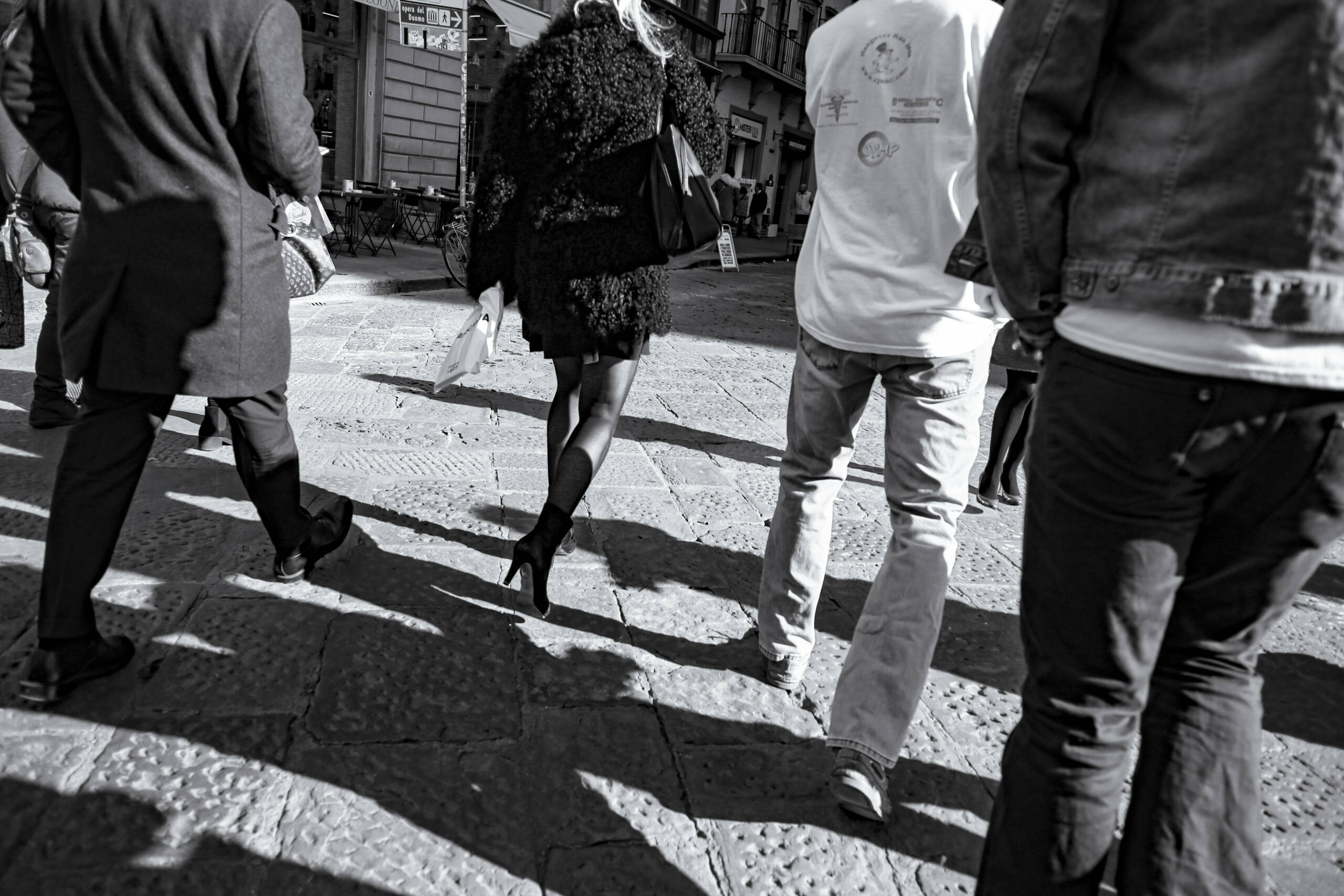
With no faces, the bags do the talking. They’re the most legible thing in the picture. For plenty of visitors they’re the most legible thing about the trip too. A stiff paper bag with a logo on it is advertising as well, carried past thousands of people on the way back to the hotel.
A City People Come to Shop In
Florence sells itself on Brunelleschi and the Uffizi. It also has Via de’ Tornabuoni, a few minutes’ walk from the cathedral and lined with luxury houses, several of them Florentine to begin with. Gucci started in Florence, and so did Salvatore Ferragamo’s business and Emilio Pucci. Ferragamo still has its headquarters in the medieval Palazzo Spini Feroni on Via de’ Tornabuoni, with a shoe museum inside. For many visitors from outside the EU the shopping is part of the reason to come, and tax refunds on their purchases take a real slice off the price.
What the City Is Trying to Manage
Florence has spent years trying to keep its historic centre from turning into a stage set. In 2023 the city banned new short-term holiday rentals in the UNESCO-listed core, and it has restricted some kinds of new food and souvenir shops there as well. The number of people actually living inside the old centre has been falling for years as flats turn into rentals.
Shopping visitors sit awkwardly in that argument. They spend far more per head than a day-tripper eating a sandwich on church steps. The flagship stores they fill have also taken over storefronts that used to serve people who live there. Florence doesn’t want to turn that money away. It wants it spread across more streets and more months of the year.
None of that shows up in the photo. The shadows are long and the bags are full.