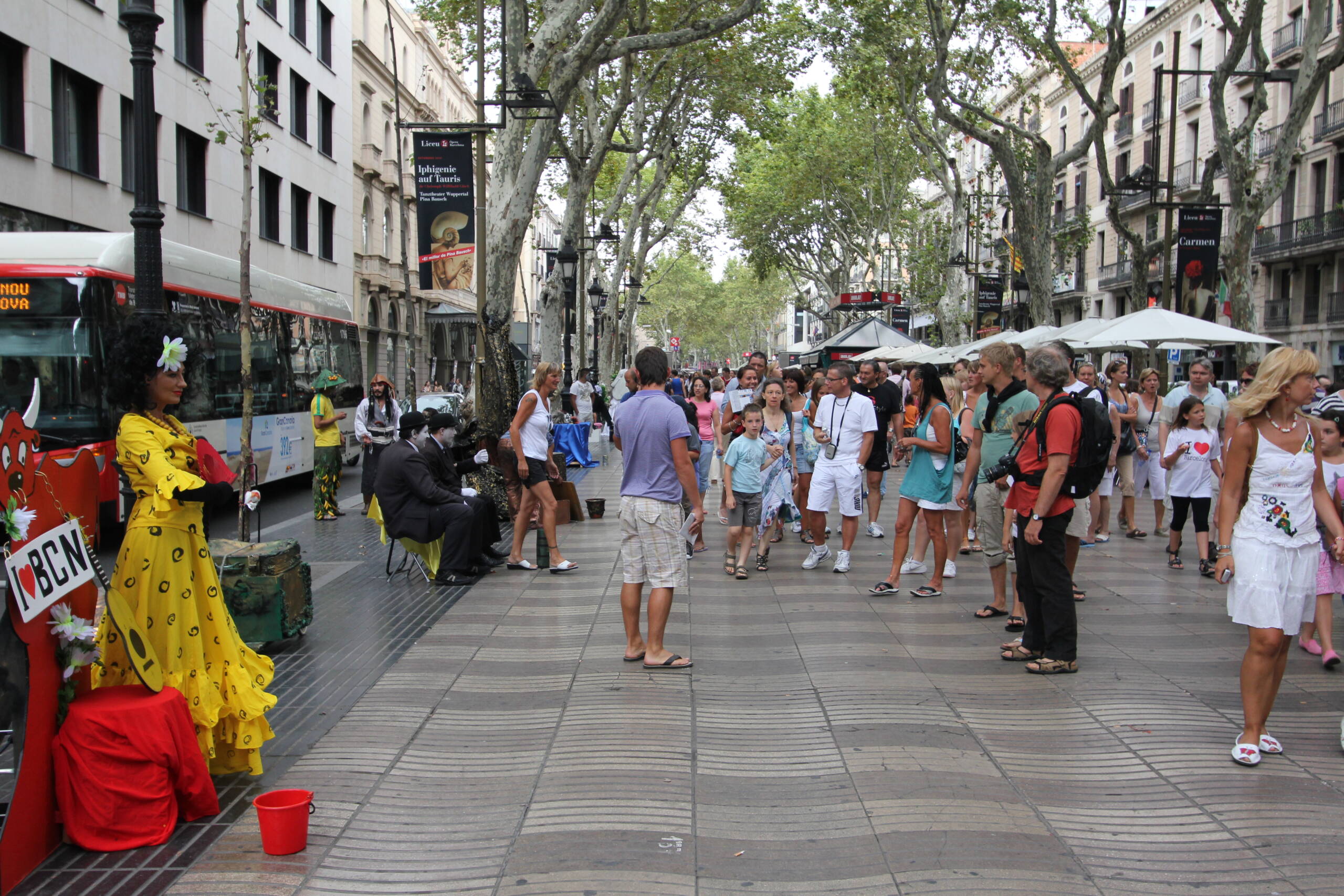
The street is alive in the way only certain cities manage — trees forming a long green canopy, people drifting in every direction, and the constant low music of footsteps, conversations, and street performance.
On the left, a woman in a bright yellow flamenco dress holds her pose beside a red “I ❤️ BCN” sign, while a living statue in black sits nearby. Tourists pause, cameras ready, some already moving on. Further down the wide pedestrian avenue, the crowd thickens under the plane trees, umbrellas from cafés catching the light, a red bus sliding past on the edge of the scene.
Barcelona’s Rambla has always been more than a thoroughfare. It is a stage that never really closes. Locals, visitors, performers, and passers-by all share the same stretch of stone for a few minutes or a few hours. Nothing is permanent here except the movement itself.
There is a particular energy in places like this — the feeling that the city is constantly introducing itself, over and over, to anyone willing to slow down and look.